
At an aggressive starting price of 18.79 lakh, the Tata Sierra.ev has a real-world range of 510 to 530 km with the 75 kWh battery pack on a single charge while the smaller 63 kWh battery coughs out a real-world range of 440 to 460 km, plus lifetime battery warranty as standard. And with the intelligent Quad-Wheel Drive system pushing out 504 Nm of torque, the EV flies from 0 to 100 km/h in just 5.8 seconds, says Rajesh Karkera.
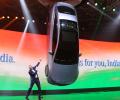
The first all electric Mercedes AMG launched in India

Prime Minister Narendra Modi and Indonesian President Prabowo Subianto have significantly advanced the India-Indonesia Comprehensive Strategic Partnership, securing crucial agreements on defence, critical minerals, and maritime security, including BrahMos missile supply and Sabang port development.

Maruti will showcase its first concept electric vehicle, the e-SURVIVOR; M&M it's six new EVs, including two futuristic concepts
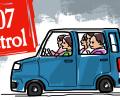
As Prime Minister Narendra Modi urges Indians to travel less, rising fuel prices are already changing driving habits.

The Strait of Hormuz crisis is impacting lifestyles worldwide, from reduced gold purchases in India to energy conservation in Europe and Japan, as governments urge citizens to adapt to the global energy shock.
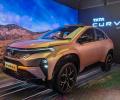
India's electric passenger vehicle market saw an 87.4 per cent year-on-year increase in FY26, reaching 233,246 units, primarily driven by the mid-size SUV segment (20-30 lakh price bracket), while the entry-level segment (sub-10 lakh) experienced a decline.

'It is going to be extremely rapid and anybody who is not there, be it investor, manufacturer, supplier, will miss out.'
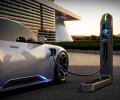
With a million-odd electric vehicles (EVs) - two-wheelers, e-rickshaws, buses and passenger cars - expected to hit the road this calendar year, the shift from gasoline-powered vehicles has become irreversible. Now the question is whether the supply chain is ready for this shift. Key components - the high-powered lithium-ion battery and the cells which go with it, the electric motor, and the electronics powered by chips - account for nearly 60 per cent of the cost of an EV.
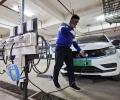
India's electric vehicle (EV) market experienced a significant surge in financial year 2025-26 (FY26), with e4W registrations nearly doubling and e2Ws growing by over 20%, propelled by expanding charging infrastructure, diverse model launches, and accessible financing.
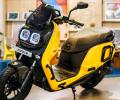
India's home-grown EV startups say the government's auto PLI scheme is helping big players while shutting out innovators building electric two- and three-wheelers from scratch.

'In all these years of rupee depreciation, of rising oil prices, of inflation caused by import dependence, not one leader had the courage to look the people in the eye and say: Please do this for your country.'
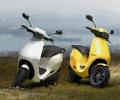
Driven by improved customer experience, Ola Electric is witnessing "clear outcomes" in market share from its focused service transformation programme, the company said, as it registered 9,020 units in December, lifting its month-on-month share to 9.3 per cent from 7.2 per cent in November.

Driven by improved customer experience, Ola Electric is witnessing "clear outcomes" in market share from its focused service transformation programme, the company said, as it registered 9,020 units in December, lifting its month-on-month share to 9.3 per cent from 7.2 per cent in November.

A readout by the US said the agreement marked a milestone in the strategic partnership between the two nations to ensure that the foundational elements required for advanced technology and energy are available within trusted networks.
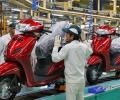
Honda Motorcycle & Scooter India (HMSI) plans to create over 3,800 jobs and expand its annual two-wheeler production capacity to 80 lakh units by 2028, reinforcing India's role as a global manufacturing and export hub for Honda.
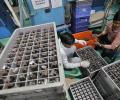
The new four-wheeler (4W) electric vehicle (EV) policy may spur the entry of global majors. The manufacturing policy cuts Customs duty to 15 per cent, given a minimum investment commitment. It calls for a minimum investment of Rs 4,150 crore (about $500 million) for making electric four wheelers (e-4Ws), with manufacturing to commence within three years of approval.

From EV bus expansion to airport-like terminals and rural connectivity, Uttar Pradesh is overhauling public transport to cut pollution and ensure every village has modern, affordable travel, reports Siddharth Kalhans.

The India Meteorological Department has issued a 'red' alert for Mumbai, Thane, and Raigad districts, forecasting heavy to very heavy rainfall and strong winds. Residents are advised to avoid unnecessary travel, and warnings include potential flash floods, structural damage, and disruptions to essential services. The Brihanmumbai Municipal Corporation has also urged caution and deployed officials to monitor the situation.

Hyundai Motor India Ltd (HMIL) announced plans to make Tamil Nadu its 'flagship EV hub for India', committing over 26,000 crore in investment, enhancing localisation, and creating approximately 2,000 additional jobs over the next five to six years. The company will roll out two new EV models from its Chennai facility this year, including its first mass-market dedicated EV.

Notwithstanding the economic complementarities and the host of agreements for deepening economic relation on a host of areas, both sides share common viewpoints on the foreign policy domain and seek common grounds to serve as a counterweight to China, notes Dr Rajaram Panda.
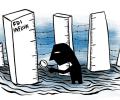
India's foreign direct investment (FDI) inflows are projected to surpass $90 billion in 2025-26 (FY26), driven by robust policy reforms, free trade agreements, and strong economic growth, according to DPIIT Secretary Amardeep Singh Bhatia.

Prime Minister Narendra Modi has appealed to citizens to adopt austerity measures, including avoiding destination weddings abroad and reducing edible oil consumption, to mitigate the impact of the West Asia crisis on India's economy.

TVS Motor Company is strategically positioned for sustained outperformance in the domestic two-wheeler industry, propelled by increasing market share in scooters, premium motorcycles, electric vehicles (EVs), and robust export growth, according to analysts.

Despite India's electric passenger vehicle market experiencing an 83.6% year-on-year surge in FY26, new foreign entrants VinFast and BYD have significantly outpaced Tesla, which struggles with high import duties, a limited retail footprint, and a lack of local manufacturing commitment.

Indian car buyers care more about affordability than technology, keeping ICE vehicles dominant while hybrids emerge as the preferred transition option and EVs struggle in the mass market.
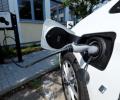
While traditional automakers in India are reeling under a global shortage of semiconductors, the country's electric vehicle (EV) makers, too, are now facing a shortage of lithium-ion batteries, a key raw material. The soaring prices of metals like lithium, nickel and cobalt, which are the primary constituents of the cell, as well as supply chain bottlenecks, are also pushing up the cost of batteries. Battery manufacturers say that prices have been increasing every quarter since the beginning of 2021.
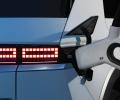
Under FAME-II, automakers provided subsidies to electric vehicle (EV) customers at the time of purchase, with the understanding that the government would reimburse the firms later.

India's rapidly ageing truck fleet, with 42% of vehicles over 12 years old, is set to trigger a replacement-driven growth of 3-5% annually over the next five years.
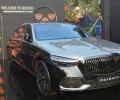
What we will not do is discount deeply, neither will we compromise on product substance, says Managing Director and Chief Executive Officer (MD&CEO) Santosh Iyer.

Brokerage Bernstein has warned Prime Minister Narendra Modi that India risks squandering recent economic gains unless it accelerates structural reforms, particularly in jobs, manufacturing and innovation.

Investors should do thorough due diligence when selecting a platform.

The investment will be made through a joint venture with Toshiba and Denso. The battery is the most expensive single part of an EV.

'While salary increments are moderating compared to last year, not all functions are moving at the same pace.'
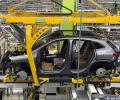
Automobile manufacturers are increasingly vocal about the mounting paperwork and delays associated with India's Production-Linked Incentive (PLI) scheme for the automotive sector, arguing that compliance requirements are becoming as challenging as meeting technical eligibility conditions. They are pushing for a simpler, faster, and more predictable certification and compliance framework.
BMW India has outpaced rival Mercedes-Benz India in luxury car registrations for the first quarter of calendar year 2026, driven by new product launches and a growing electric vehicle segment, even as the overall luxury car market remains largely flat.
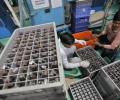
Escalating geopolitical tensions in West Asia are beginning to disrupt India's automotive supply chain, leading to rising commodity prices, logistics bottlenecks, material shortages, and pressure on consumer demand, with two-wheeler makers already raising prices.
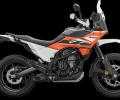
Bajaj Auto reported a significant increase in its consolidated Q4FY26 performance, with profit after tax more than doubling to approximately 3,662 crore, a 103 per cent year-on-year rise, primarily driven by record volumes, an improved product mix, and the strategic consolidation of Bajaj Auto International Holdings AG (BAIHAG).
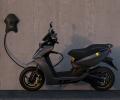
The soaring prices of metals like lithium, nickel and cobalt, which are the primary constituents of the cell, as well as supply chain bottlenecks, are also pushing up the cost of batteries

While SUVs have steadily gained share across the industry, data shows that nearly three in 10 luxury vehicles sold in India are sedans, highlighting the segment's resilience despite years of SUV-led growth.
